Your Guide to EV Charger Ports, Why so Many?
The world of electric vehicle charging isn’t complicated because it needs to be. It’s complicated because nobody got their act together at the beginning. Now we’re stuck with a patchwork of standards that makes buying and charging an EV more confusing than it should be.
The Main Players
Level 1, 2, and 3 Charging
Before diving into connector types, you need to understand charging levels.
Level 1 refers to standard household outlets (120V). These are painfully slow, adding about 3-5 miles of range per hour. They’re fine if your daily commute is walking distance and you just occasionally need to drive.
Level 2 is what most home EV chargers use (240V). These add about 15-40 miles of range per hour, making them the sweet spot for overnight home charging.
Level 3/DC Fast Charging involves commercial-grade high-powered stations (400-900V) that can add 100-200 miles in 30 minutes. These are what you need for road trips.
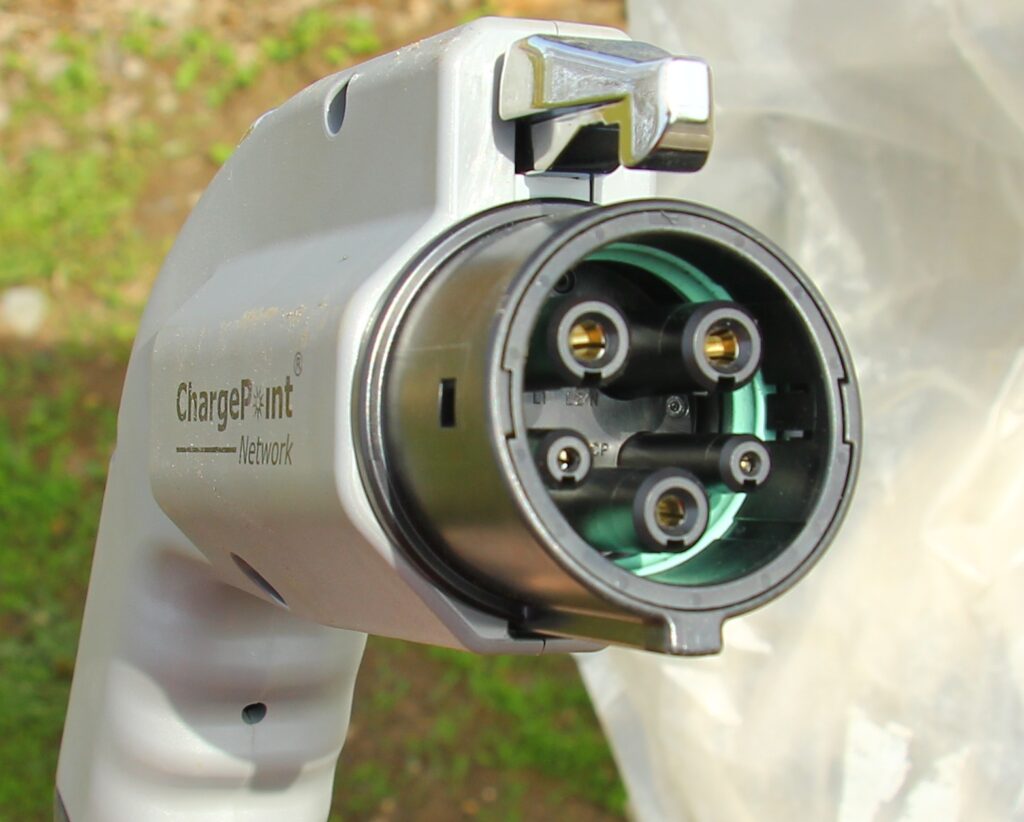
J1772 (The American Standard)
This five-pin connector is the Ford Taurus of EV plugs – utterly unremarkable but found everywhere in North America. Almost every EV can use it through adapters if needed.
Nearly all EVs sold in North America use this for Level 1 and 2 charging. It supports speeds up to 19.2 kW (Level 2) and has a distinctive bulky connector with a button you press to disconnect.
CCS (Combined Charging System)
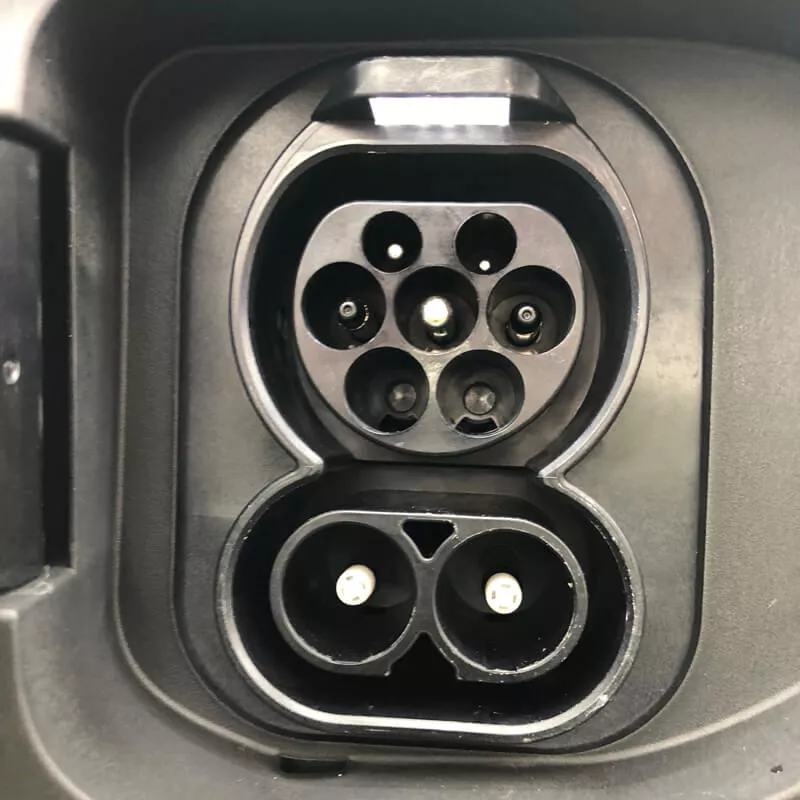
Take a J1772 connector, add two DC pins underneath, and you’ve got CCS. It’s like J1772’s bigger brother who went to the gym.
Most non-Tesla American and European EVs use this standard. It supports charging speeds up to 350 kW and looks like a J1772 with an additional two-pin section below.
CHAdeMO
The first major DC fast charging standard, developed in Japan. Despite early adoption, it’s becoming the Betamax of charging standards – technically sound but losing the market war.
This standard is primarily used by Nissan Leaf and some Japanese EVs. It offers charging speeds up to 100 kW (newer versions support 400 kW) and features a round connector with a notch at the top and a mechanical locking mechanism.
Tesla Connectors NACS
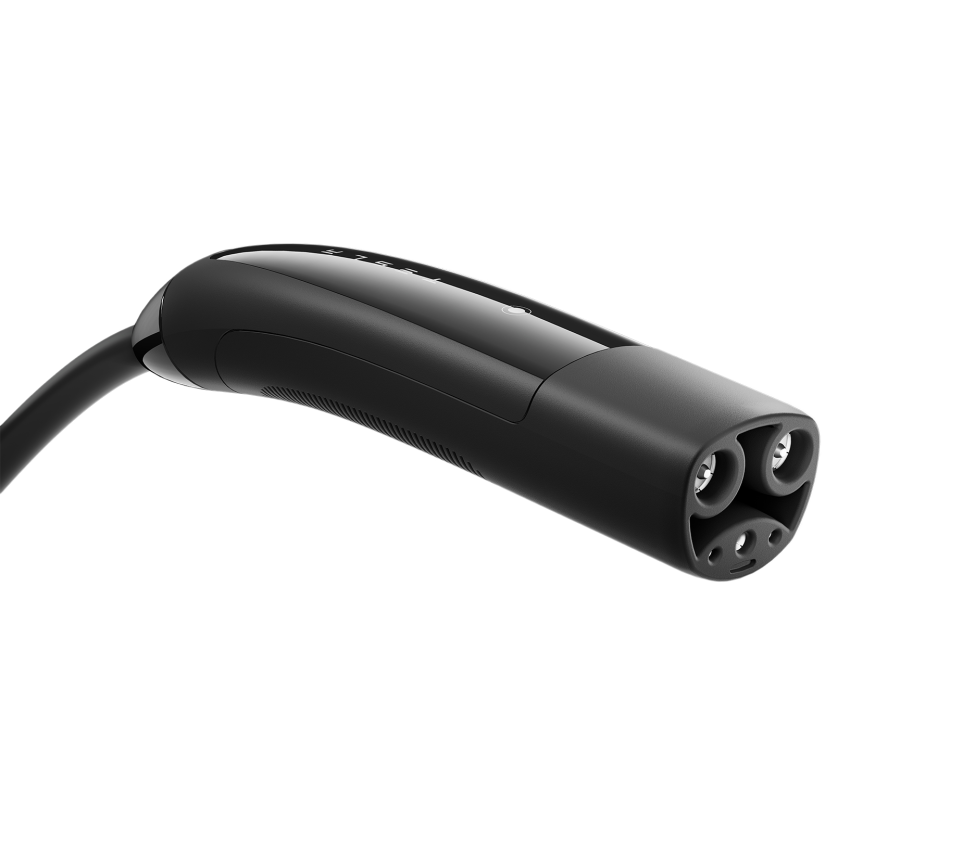
Tesla initially developed their proprietary connector that handled all charging levels through one elegant port. After years of keeping it to themselves, they rebranded it as the North American Charging Standard (NACS) and opened it to other manufacturers.
All Tesla vehicles use this connector, with other manufacturers announcing adoption. It supports charging speeds up to 250 kW and features a sleek, slim design that’s significantly smaller than other connectors.
GB/T
China has its own standard because of course they do. You’ll only encounter these if you’re driving an EV in China.
This standard is used by EVs sold in China. It supports charging speeds up to 240 kW and is similar in size to CCS but with a different pin layout.
The Reality Check
The worst part of this mess is that if you buy an EV, you’re locked into the infrastructure that supports your connector type. Tesla owners had it best with their extensive, reliable Supercharger network, which is why their proprietary connector is becoming the de facto standard in North America.
Here’s what actually matters:
Home charging compatibility is essential. Almost any EV can charge at home with the right equipment. This is where you’ll do 80-90% of your charging anyway.
Fast charging access is the real concern. Before buying an EV, check the fast charging networks in your area and along routes you frequently travel.
Adapters exist for most situations. Many EVs come with adapters, or you can buy them separately. Tesla sells adapters allowing their cars to use J1772 and CCS stations.
The future is probably NACS. With Ford, GM, Rivian, and others adopting Tesla’s connector, it’s likely to become the dominant standard in North America.
Making Sense of It All
If you’re buying an EV now:
- A Tesla still offers the most seamless charging experience in North America
- Non-Tesla EVs with CCS have growing charging networks through Electrify America and others
- Avoid CHAdeMO unless you never plan to drive long distances
- Any EV works fine for home charging
The bright side? This chaos is temporary. Markets eventually standardize because fragmentation is inefficient. VHS beat Betamax. Blu-ray beat HD DVD. Something will win the charging port war too.
In the meantime, you’ll need to factor charging compatibility into your EV purchase decision. It’s an annoying extra step, but not a reason to avoid going electric. The technology is maturing faster than the infrastructure, but the infrastructure is catching up.
The promise of EVs remains the same: lower operating costs, less maintenance, and never having to stand at a gas pump again. The charging standards will sort themselves out eventually. They always do.