Homeowner’s Guide to Your Electrical Panel (Breaker Box)
Your electrical panel sits quietly on the wall, probably in your basement or garage, distributing power throughout your home without much attention. Most homeowners don’t think about it until a breaker trips or something stops working.
This guide covers everything you need to know about your breaker box, from basic function to when you need professional help. Whether you’re dealing with frequent trips, planning a renovation, or just want to understand your home’s electrical system better, here’s what matters.
What Is an Electrical Panel (Breaker Box)?
The Heart of Your Home’s Electrical System
Your electrical panel serves as the distribution hub for all electricity in your home. Power flows in from BC Hydro’s service lines, enters your panel, and gets distributed to every outlet, light, and appliance throughout the house. The breakers inside act as safety devices, when a circuit overloads or a fault occurs, they automatically cut power to prevent fires or equipment damage.
Your panel handles everything from basic lighting to major appliances like your electric heat system or hot tub. When electrical demand exceeds what a circuit can safely handle, the breaker trips. This isn’t a malfunction, it’s the system protecting your home.
Electrical Panel vs Breaker Box — What’s the Difference?
There’s no practical difference between these terms. “Electrical panel,” “breaker box,” “service panel,” and “load center” all refer to the same metal enclosure that houses your circuit breakers. Some people still use the term “fuse box,” though that refers to an older technology we’ll discuss later.
The terminology varies by region and age group, but they all describe the same component in your home’s electrical system.
How to Identify Your Electrical Panel Type
Step 1 – Locate Your Main Panel or Sub-Panel
Most Abbotsford homes have their main panel installed in the basement, garage, or utility room. You’re looking for a gray or tan metal box mounted on an interior wall, typically ranging from 14 to 20 inches tall and about 3 to 4 inches deep.
Some properties also have sub-panels, smaller distribution boxes that receive power from the main panel to serve additions, workshops, or detached structures. Your main panel connects directly to the utility meter, while sub-panels feed off the main panel through their own set of wires.
Step 2 – Safety Precautions Before Opening
Before opening your panel cover, take these safety steps:
- Stand on a dry surface and wear rubber-soled shoes
- Keep one hand behind your back or in your pocket to avoid creating a path through your body
- Never touch the panel with wet hands or while standing in water
- Don’t touch any wires or terminals inside—only the breaker switches themselves
- If you see any damage, scorch marks, or smell burning odors, call a licensed electrician immediately
The panel cover (the door that swings open) is generally safe to open. However, the inner deadfront—the panel that covers the wiring and bus bars—should only be removed by qualified professionals. Live electrical components behind that cover can be lethal.
Step 3 – Examining the Breakers and Common Brand Names
Once you’ve located your panel and taken proper safety precautions, you’ll want to understand what you’re looking at. Open the panel door and you’ll see rows of circuit breakers—small switches that control power to different areas of your home.
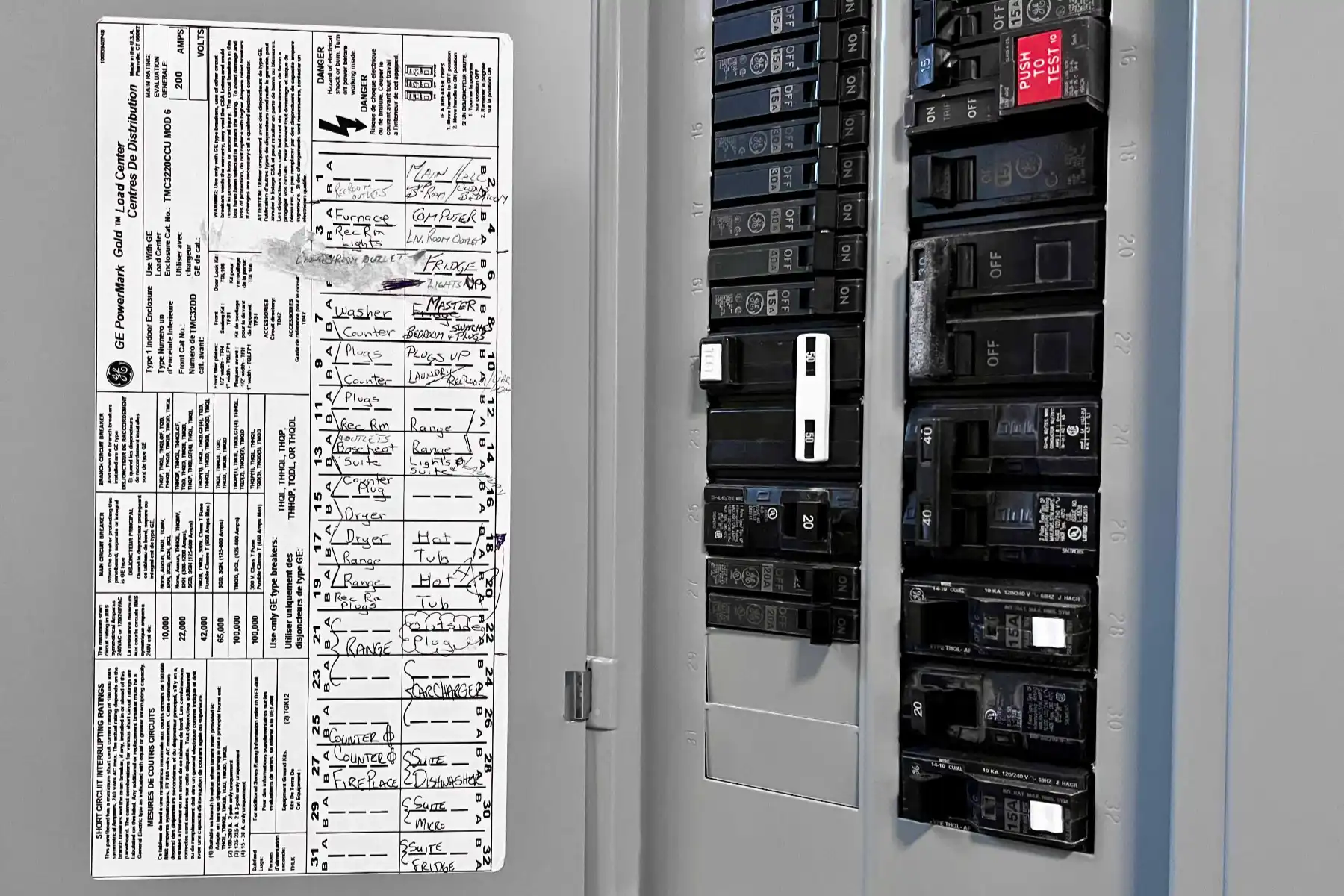
Reading the Labels and Breaker Map
A properly labeled panel makes troubleshooting simple. Each circuit breaker should have a label indicating which area or appliance it controls—”kitchen outlets,” “main bedroom,” “garage,” and so on.
Many panels include a circuit directory on the inside of the door where you can write or update these labels. If your panel lacks clear labeling, creating an accurate map is one of the most helpful maintenance tasks you can do. We’ll cover simple labeling techniques later in this guide.
The breakers themselves often display their amperage rating (15, 20, 30, etc.) stamped on the switch handle. You’ll also notice that some breakers are wider than others—these double-pole breakers serve 240-volt circuits for larger appliances.
Identifying Your Breaker or Panel Brand
Look for the manufacturer’s name stamped on the panel door or printed on the breakers themselves. The brand matters more than you might think—it affects parts availability, safety considerations, and whether upgrades are recommended. If you’re not sure on your brand, or have concerns about your panel please contact us for an inspection.
Common Types of Breakers and Panels
Main Service Panels (100A, 200A, 400A)
The amperage rating on your main breaker indicates how much total current your home can draw at once. This is your home’s electrical capacity.
100-Amp Panels: Common in older homes and small properties. Adequate for basic electrical needs but often insufficient for modern homes with multiple large appliances, electric heating, and EV charging.
200-Amp Panels: The current standard for most residential installations. Provides enough capacity for typical modern homes with electric ranges, dryers, heating systems, and room for expansion.
400-Amp Panels: Used in larger homes with substantial electrical demands—multiple heating zones, pool equipment, workshops, and several EV chargers. Less common in standard residential applications.
Most homes built in Abbotsford after 1980 have 200-amp service. If you’re planning significant electrical upgrades or experiencing capacity issues, checking your main breaker’s amperage rating is the first step.
Single vs Double-Pole Breakers
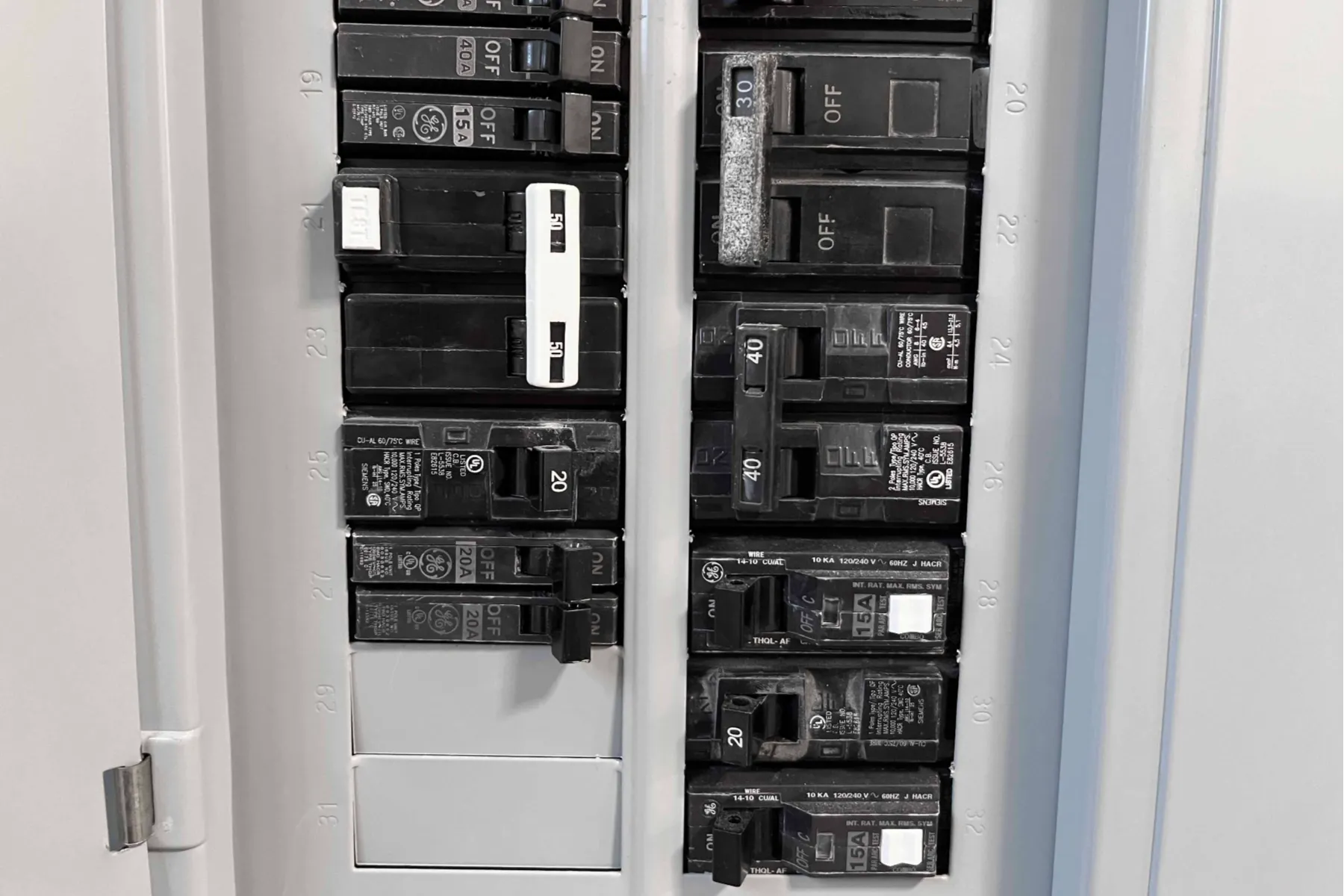
Single-Pole Breakers: These standard breakers take up one slot in your panel and provide 120 volts. They’re rated at 15 or 20 amps and protect lighting circuits, most outlets, and small appliances.
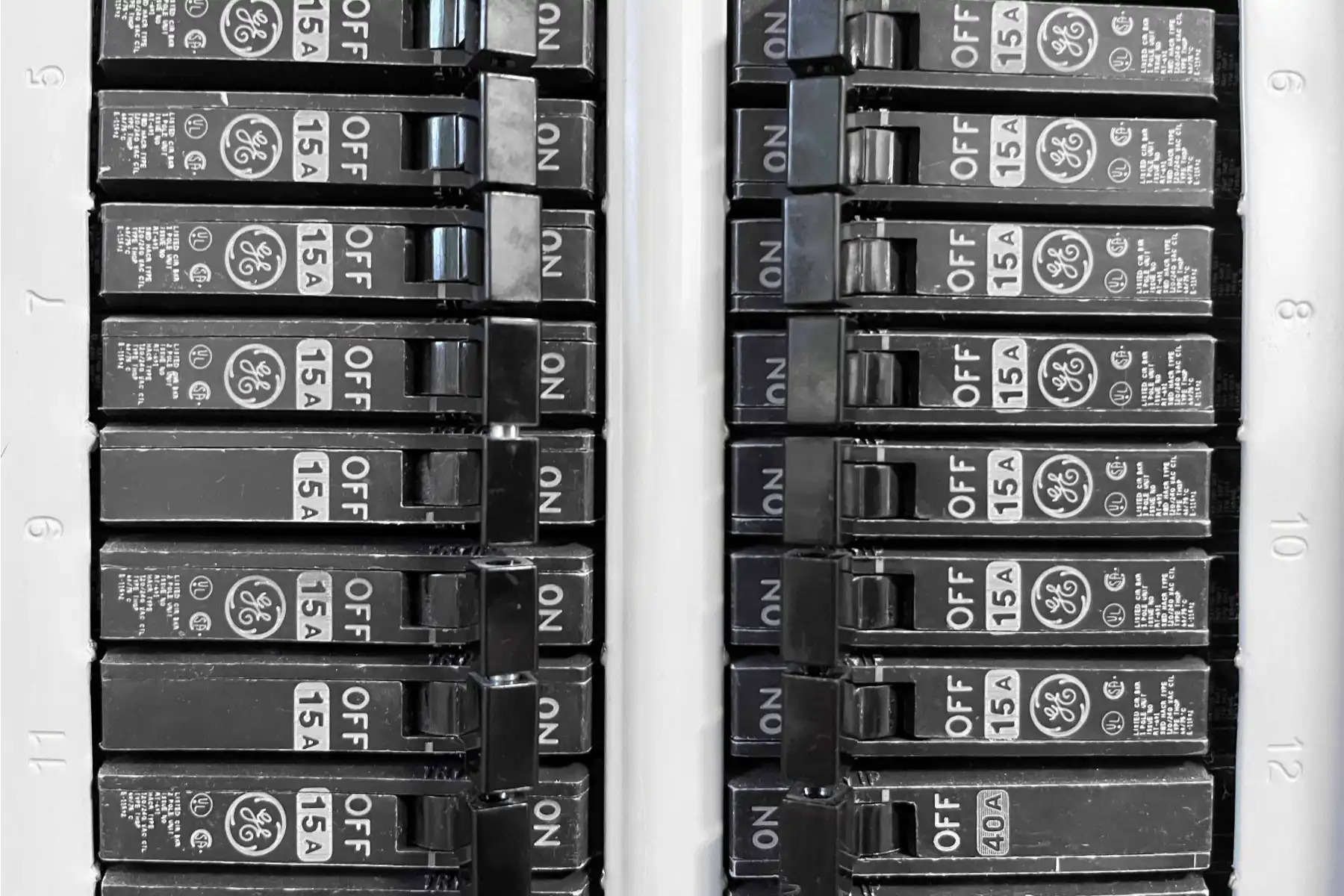
Double-Pole Breakers: These wider breakers occupy two slots and provide 240 volts. They’re used for larger appliances and equipment that require more power—electric ranges, dryers, water heaters, air conditioners, and electric vehicle chargers. Common ratings include 30, 40, 50, and 60 amps depending on the connected load. You can identify double-pole breakers by their width (twice as wide as single-pole) and their connected handle—both sides switch together as one unit.
AFCI and GFCI Safety Breakers
Modern electrical codes require specialized breakers for enhanced safety:
AFCI (Arc Fault Circuit Interrupter) Breakers: These breakers detect dangerous electrical arcing that can cause fires. They’re required for most living areas in homes built or renovated after 2002. AFCI breakers look similar to standard breakers but have a test button and are slightly thicker.
GFCI (Ground Fault Circuit Interrupter) Breakers: These protect against ground faults—situations where electricity takes an unintended path, potentially through a person. They’re required in wet locations like bathrooms, kitchens, garages, and outdoor outlets. GFCI protection can be provided at the breaker or through GFCI outlets.
Both types add layers of protection beyond simple overcurrent protection. Many newer breakers combine both technologies (AFCI/GFCI dual function) for maximum safety.
Sub-Panels and Expansion Panels
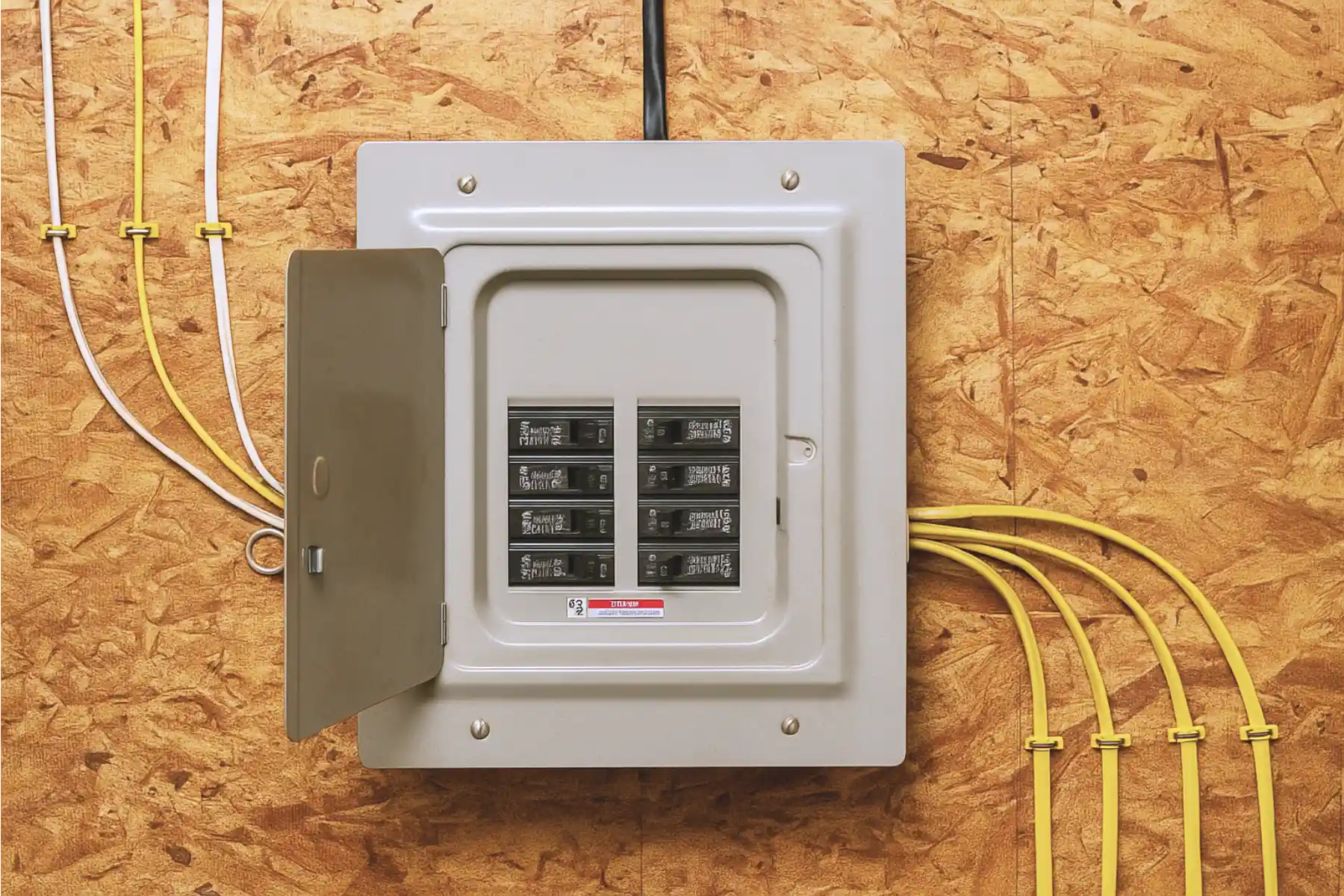
Sub-panels extend your electrical system without replacing your main panel. They’re fed from the main panel through a large circuit and essentially create a second, smaller distribution point.
Common sub-panel applications include:
- Home additions or finished basements
- Detached garages or workshops
- Pool and hot tub equipment
- Areas far from the main panel
Sub-panels have their own circuit breakers but no main utility connection. They receive power through a breaker in your main panel, which acts as the disconnect for the sub-panel.
Fuse Boxes — Why They’re Obsolete in Modern Homes
Fuse boxes were the standard before circuit breakers became common. They work by using a metal strip that melts when overloaded, breaking the circuit. While this provides protection, fuses have several drawbacks:
- One-time use—blown fuses must be replaced, not reset
- Easy to install the wrong amperage fuse, creating fire hazards
- No built-in AFCI or GFCI protection available
- Incompatible with modern electrical demands
- Not permitted under current Canadian Electrical Code for new installations
If your home still has a fuse box, upgrading to a modern breaker panel improves both safety and functionality. You’ll also find it easier to add circuits for renovations or new appliances.
Signs You Need to Upgrade or Replace Your Electrical Panel
Breakers Frequently Trip or Feel Hot
Occasional breaker trips are normal when you overload a circuit. Frequent or unexplained trips indicate a problem. Possible causes include:
- Undersized circuits for current usage
- Deteriorating breakers that no longer hold properly
- Loose connections creating resistance and heat
- Actual overload conditions requiring additional circuits
Breakers should feel slightly warm during heavy use but never hot to the touch. A hot breaker or panel surface indicates a potentially dangerous condition requiring immediate professional attention.
You’ve Added a Hot Tub, EV Charger, or New Appliances
Large electrical additions often exceed your existing panel’s capacity. Common upgrades that trigger panel replacement:
- EV chargers (typically require 40-60 amp circuits)
- Hot tubs (usually 40-60 amps)
- Electric heat systems
- Central air conditioning
- Workshop equipment or welders
- Generator installations
If your main breaker is 100 amps and you want to add an EV charger and hot tub, the math doesn’t work. You’ll need to upgrade to 200-amp service to handle the additional load safely.
Your Home Still Uses Fuses or a Split-Bus Panel
These older systems present several issues:
- Limited capacity for modern electrical demands
- Safety concerns with aged components
- Difficulty finding replacement parts
- Insurance companies may charge higher premiums or refuse coverage
- Can affect home resale value
Upgrading to a modern breaker panel provides better protection and eliminates these concerns.
Renovations or Additions Need More Circuits
When you renovate areas of your home, electrical codes require circuits that meet current standards. This often means:
- Separate circuits for countertop outlets
- AFCI protection for living spaces
- Adequate lighting circuits
- Dedicated circuits for appliances
If your existing panel lacks open spaces for new breakers or can’t support the additional load, replacement becomes necessary during the renovation process.
Buzzing, Odors, or Flickering Lights
Warning signs that demand immediate professional evaluation:
Buzzing or Humming: Panels should operate silently. Buzzing indicates loose connections or failing components.
Burning Smell: Any burning odor around your panel suggests overheating connections or deteriorating insulation.
Flickering Lights: Consistent flickering throughout the house (not just one fixture) can indicate panel problems or utility connection issues.
Rust or Corrosion: Visible rust, corrosion, or water damage around the panel indicates moisture intrusion that compromises safety.
Scorch Marks: Blackening around breakers or on the panel surface shows dangerous overheating.
Don’t wait on these symptoms. Contact a licensed electrician for an immediate electrical safety inspection.
How Often Should You Replace an Electrical Panel?
Electrical panels don’t have fixed lifespans, but several factors indicate when replacement makes sense:
Age: Panels over 25-30 years old should be evaluated for replacement, even if functioning. Components degrade over time, and older panels may not meet current safety standards.
Brand/Model Issues: Some panel brands have documented safety problems (Federal Pioneer Stab-Lok, certain Challenger models, Zinsco panels). Replace these regardless of age.
Capacity: When your electrical needs exceed your panel’s capacity, replace it before problems develop.
Corrosion or Damage: Any panel showing rust, water damage, or burn marks needs immediate replacement.
Real Estate Transactions: Many home inspectors recommend panel replacement during sales. Addressing this before listing prevents negotiation issues.
Preventive replacement costs less than emergency replacement after failure. If your panel shows warning signs, schedule an evaluation rather than waiting for catastrophic problems.
What size panel do I need for my home?
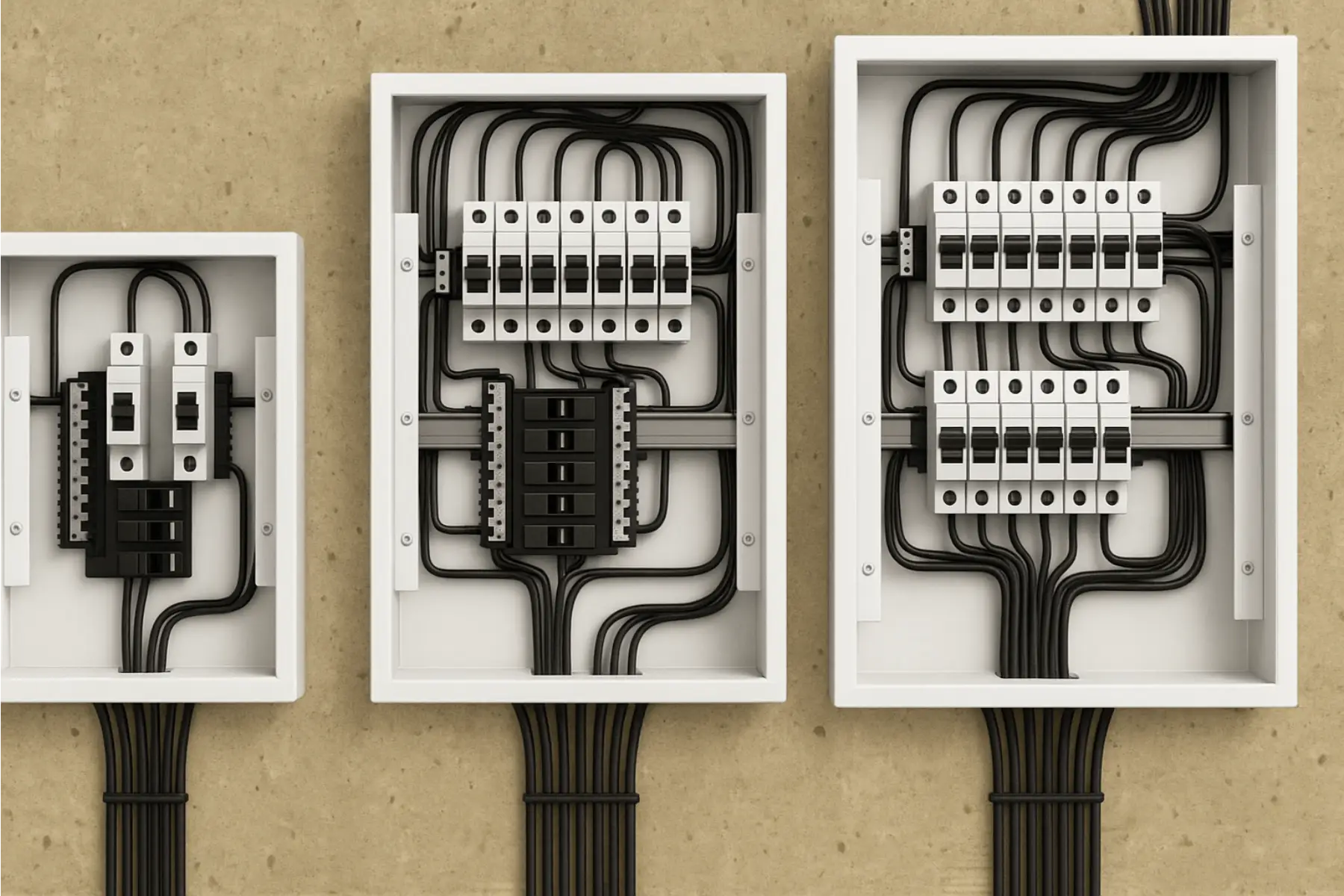 Panel size depends on your home’s total electrical load. Here’s a general guideline:
100-Amp Panel: Appropriate for:
- Small homes under 1,500 square feet
- Homes without electric heat or central AC
- Limited large appliances
- No plans for EV charging or major additions
200-Amp Panel: Recommended for:
- Most modern homes (current standard)
- Properties with electric heat or central AC
- EV charging capability
- Multiple large appliances
- Room for future expansion
400-Amp Panel: Necessary for:
- Large homes over 4,000 square feet
- Multiple heating zones
- Several EV chargers
- Home workshops with heavy equipment
- Pool or hot tub plus other large loads
An electrician can perform a load calculation based on your specific situation. This calculation considers:
- Square footage
- Heating and cooling systems
- Major appliances
- Lighting loads
- Planned additions like EV chargers or hot tubs
About Harder Power Company Ltd.
Licensed & Insured Electricians Serving Abbotsford and the Fraser Valley
Harder Power Company Ltd. provides professional electrical services throughout Abbotsford and the Fraser Valley. Our licensed electricians handle everything from panel upgrades to complete residential electrical services, with a focus on safety, quality, and code compliance.
We serve Abbotsford, Chilliwack, Mission, Langley, and surrounding communities with reliable electrical solutions for homes and businesses.
Transparent Quotes, Safety-First Approach
We believe in straightforward communication and honest pricing. When you contact us for electrical panel service:
- Free Consultation: We’ll discuss your situation and determine whether a service call is needed
- Clear Quotes: All estimates include labour, materials, permits, and applicable taxes
- Safety Priority: We identify potential hazards and recommend solutions based on electrical code and best practices
- Licensed Work: All projects include proper permitting and inspection coordination
- Warranty Coverage: We stand behind our installations with comprehensive warranty protection
Whether you’re dealing with a tripping breaker, planning a panel upgrade, or need an electrical safety inspection, we’re here to help.
Contact us to discuss your electrical panel needs or schedule a service appointment.